
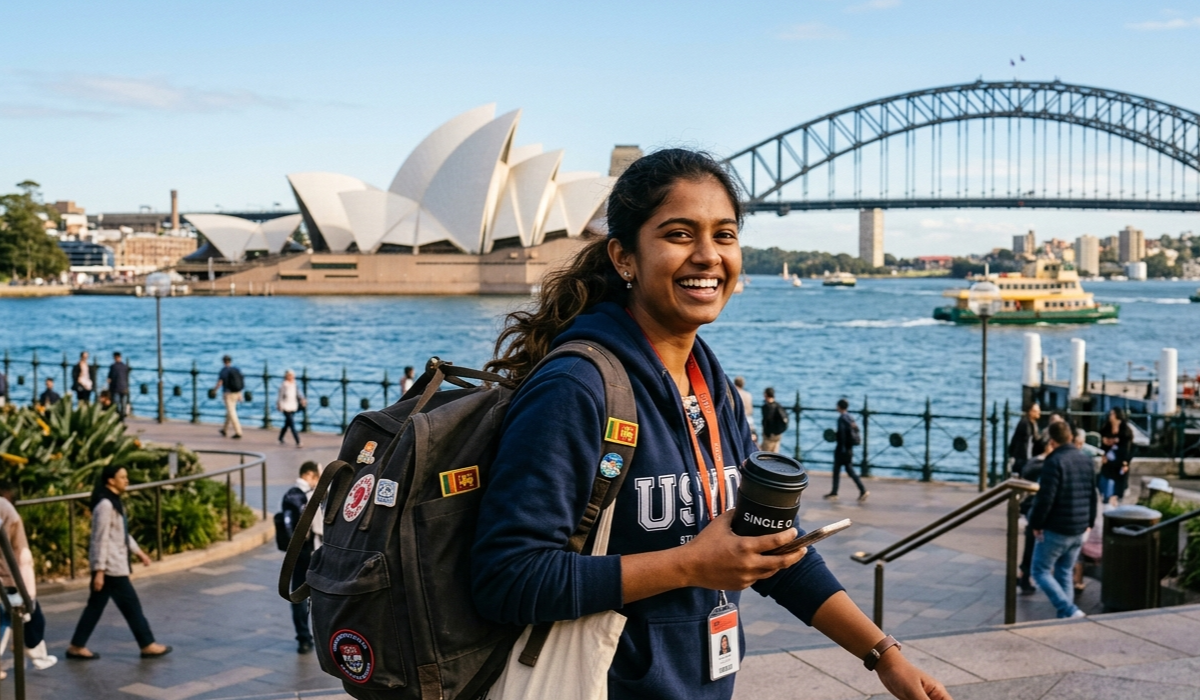
Cost of Living in Australia for Sri Lankan Students – The Real Numbers
Most Sri Lankan students underestimate what Australia actually costs, not just tuition, but everything else. Here’s an honest, practical breakdown of the real cost of living in Australia.
What the Australian Government Says You Need
Before approving your student visa, the Department of Home Affairs requires you to prove you can financially support yourself. As of 2025, the minimum financial requirement for a single student is AUD 29,710 per year, approximately AUD 2,475 per month, in addition to tuition fees and return airfare.
This is a baseline, not a comfortable budget. Most Sri Lankan students who don’t plan beyond this number find themselves financially stretched by month two. If you’re bringing a partner, add AUD 10,394. Each child adds AUD 4,449 on top of that. Build your actual budget around AUD 2,800–3,200 per month to have a realistic cushion.
Accommodation – Your Biggest Expense
Rent will consume the largest share of your monthly budget and where you choose to live makes an enormous difference. Shared rentals off-campus the most common option for international students cost between AUD 180 and AUD 400 per week depending on the city. University halls and purpose-built student accommodation cost more but include utilities.
For Sri Lankan students arriving without an established network, the first few weeks are the hardest. Use flatmates.com.au to find shared houses before you arrive. Suburbs 20–30 minutes from the city centre by public transport are consistently 20–30% cheaper than living near the CBD or university gates and the commute is manageable.
City-by-City Rent Comparison
Where you study determines how far your money goes. Here’s a realistic weekly rent guide for a room in a shared house:
| City | Weekly Rent (Shared Room) |
| Sydney | AUD 300–500 |
| Melbourne | AUD 250–450 |
| Brisbane | AUD 200–380 |
| Adelaide | AUD 180–350 |
| Perth | AUD 200–370 |
| Gold Coast | AUD 190–360 |
Students who choose to study in Adelaide or Brisbane can save up to AUD 600 per month compared to Sydney or Melbourne, that’s AUD 7,200 per year. For a Sri Lankan family funding a student abroad, that’s a significant difference.
What You’ll Actually Spend for food
This is where your habits matter most. Groceries for a single person cost around AUD 80 to AUD 150 per week at supermarkets like Aldi, Coles, or Woolworths. Aldi is consistently the cheapest, Sri Lankan students use to cooking at home will find lentils, rice, coconut milk, and fresh vegetables readily available and affordable.
Eating out regularly will blow your budget fast. A single restaurant meal costs AUD 20–30, and fast food runs AUD 10–14. If you cook most meals at home and eat out once or twice a week, you can keep food costs under AUD 400 per month. If you rely on takeaway, expect to spend double that.
How to Get Around Australia on a Student Budget
Australia’s public transport is reliable in major cities and affordable with a student concession card. With a student concession, weekly transport costs range from AUD 20 to AUD 40 depending on how often you travel. Without a concession card, costs can double, apply for yours on arrival.
In Melbourne, the Myki card; in Sydney, the Opal card; in Brisbane, the go card. All offer concession rates for full-time students. Cycling is also popular near most Australian university campuses and costs nothing beyond the initial bike purchase. Avoid rideshare apps as a daily habit, they’re convenient but expensive at AUD 15–30 per trip.
Utilities, Internet, and Phone
If utilities aren’t included in your rent, budget AUD 40 to AUD 80 per week for electricity, gas, water, and internet; split between housemates, this drops significantly. Always ask landlords or housemates upfront whether bills are included before signing a lease. Many shared houses split utilities evenly, bringing individual costs to AUD 50–80 per month.
For your phone plan, prepaid SIM cards from Aldi Mobile, Amaysim, or Boost offer solid data plans between AUD 20–35 per month. Avoid locking into a 24-month contract in your first semester, your living situation and city may change.
Health Insurance in Australia for International Students (OSHC Is Not Optional)
Overseas Student Health Cover (OSHC) is mandatory for the full duration of your student visa and costs approximately AUD 600–1,000 per year for a single student. This must be purchased before your visa is granted. Providers include Bupa, Medibank, nib, and AHM; compare prices online before committing as costs vary between providers for the same coverage level.
OSHC covers GP visits, some hospital treatment, and limited pharmaceuticals. It does not cover dental or optical, budget an extra AUD 100–200 per year if you need those. Most university health clinics offer low-cost or bulk-billed GP appointments for enrolled students.
How Much Can You Earn Working Part-Time in Australia?
Student visa holders can work up to 48 hours per fortnight during term, with unlimited hours during scheduled breaks. Australia’s national minimum wage as of July 2025 is AUD 24.95 per hour, with penalty rates of 125% on Saturdays and 150% on Sundays.
Working weekend shifts in hospitality or retail, the most accessible jobs for new international students, can realistically bring in AUD 1,000–1,400 per fortnight. That covers groceries, transport, and utilities for most Sri Lankan students in a shared house. It won’t cover rent entirely, but it meaningfully reduces the financial pressure on your family back home.
Realistic Monthly Budget Summary
| Expense | Budget Range (AUD/month) |
| Rent (shared house) | 800 – 1,400 |
| Groceries and food | 300 – 500 |
| Transport | 80 – 160 |
| Utilities and internet | 80 – 150 |
| OSHC | 55 – 85 |
| Phone | 20 – 35 |
| Personal and leisure | 100 – 250 |
| Total | 1,435 – 2,580 |
If you want help putting together a full financial plan alongside your university application, Global Uni Connect supports Sri Lankan students from budgeting through to arrival. Get in touch today.