
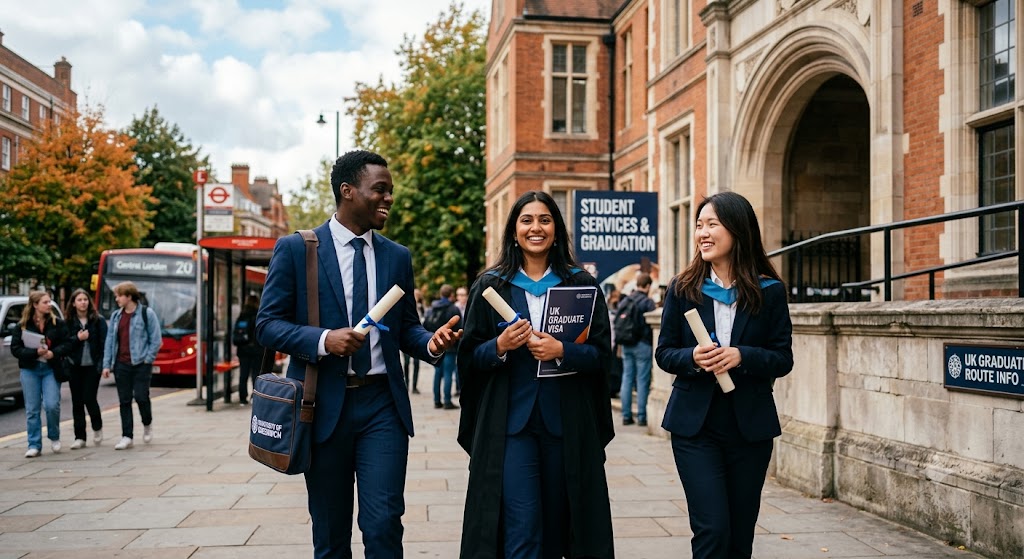
How to Stay and Work in the UK After Graduation
Graduated and want to stay in the UK? The UK Graduate Route Visa allows international students to live and work in the UK after completing an eligible degree. Here’s everything you need to know about eligibility, work rights, and the application process.
Who’s Eligible for the UK Graduate Route Visa
To qualify, you need a current Student visa (or old Tier 4) and a degree, or equivalent qualification, from a UK institution that holds a Student sponsor licence. Your university must first confirm your successful completion to the Home Office, this often takes a few weeks after your final results.
You must apply from inside the UK, before your Student visa expires, and you can only use the Graduate Route once in your lifetime. There’s no minimum grade required and no job offer needed, this route rewards simply finishing your course, not what comes after.
Graduate Visa Fees and Health Surcharge Costs
The Graduate visa application costs £937, following the April 2026 fee rise. On top, you’ll pay the Immigration Health Surcharge at the adult rate of £1,035 a year; notably higher than the £776 student rate. A standard two-year visa totals £3,007; an 18-month visa comes to £2,489.50, and PhD graduates pay £4,042 for three years.
Unlike the Student visa, there’s no bank balance requirement to prove, you just need to show you won’t rely on public funds. Dependants apply and pay separately, at the same rates, with no discount for family size.
How Long the Graduate Route Visa Lasts
A standard Graduate visa lasts two years for bachelor’s and master’s graduates, and three years for PhD and other doctoral qualifications. That clock starts from the date your visa is granted, not from your graduation date, so timing your application matters.
The visa cannot be extended or renewed under any circumstances, apply for a second Graduate visa and you’ll be refused automatically. Before it expires, you need a plan: a job offer for a Skilled Worker visa, another study option, or a different route entirely. Nothing carries over automatically.
Applying from Inside the UK: Documents and Process
You must be physically in the UK when you submit your Graduate visa application; leaving the country first, even briefly, disqualifies you. You’ll need your passport or travel document, confirmation of course completion from your university, and proof of your current immigration status.
If your Biometric Residence Permit expired within the last 18 months, you can apply through the UKVI “ID Check” app entirely from home. Otherwise, you’ll need to book an in-person appointment at a UKVCAS centre. Decisions typically take up to eight weeks, so apply well before your Student visa runs out.
What You Can and Can’t Do on a UK Graduate Route Visa
The Graduate Route is unsponsored, so you can work in almost any job, at any salary, in any sector; including self-employment and freelance work. There’s no Certificate of Sponsorship, no minimum salary threshold, and no need to justify your job to the Home Office.
What you can’t do is claim most public funds, or extend the visa itself. Dependants who join you get similar work and study rights, but each must apply and pay separately. Use this window to build UK work experience before committing to a longer-term visa route.
Switching From Graduate Route to Skilled Worker Visa
The most common next step is the Skilled Worker visa: find an employer with a sponsor licence willing to offer a role that meets the salary threshold, generally from around £41,700 a year depending on the occupation. You can switch from inside the UK without leaving, provided you apply before your Graduate visa expires.
Other options include the Health and Care Worker visa for eligible NHS and social care roles, the Global Talent visa for exceptional talent in your field, or a Spouse or Partner visa if you’re in a genuine relationship with a British citizen or settled person.
The January 2027 Rule Change You Need to Know
From 1st January 2027, the standard Graduate visa shortens from two years to 18 months for bachelor’s and master’s graduates. PhD and other doctoral graduates aren’t affected and will still receive three years. This is a confirmed Home Office change, not a proposal.
What matters is your application date, not your graduation date. If you submit a valid Graduate visa application before 1 January 2027, you still get the full two years, even if your course finishes close to the deadline. That six-month difference can matter if you’re job-hunting or aiming to switch to a Skilled Worker visa.
Common Mistakes That Delay or Derail Applications
Applying after your Student visa has already expired is the most common, and most costly mistake; there’s no grace period, and eligibility is lost outright. Applying from outside the UK, or before your university confirms course completion to the Home Office, causes similar problems.
Many graduates also underestimate the cost, forgetting the IHS jumps to the adult rate once you’re no longer a student. Others assume the visa can be extended, it can’t. Planning your next step early, ideally with guidance from consultants like Global Uni Connect, helps Sri Lankan graduates avoid these gaps entirely.
Your UK Post Study Work Visa is a limited window, not a guarantee. Plan your next move before it expires. Talk to Global Uni Connect for help mapping your path from graduation to a long-term UK career.