
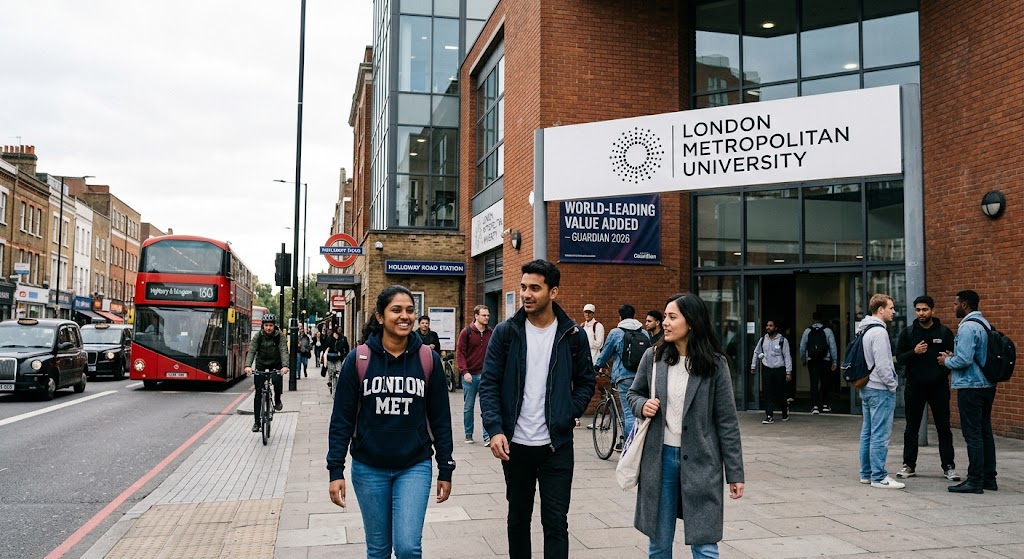
London Metropolitan University – Rankings, Courses and City Life Guide
Choosing the right university involves more than rankings alone. This guide explores London Metropolitan University rankings, popular courses, tuition considerations, and what international students can expect from daily life in London, helping you decide whether it’s the right choice for your UK study journey.
Where London Metropolitan Stands in the Rankings
League tables tell different stories depending on the source. The Guardian University Guide 2026 places London Met at 89th in the UK, up four spots from the previous year. QS ranks it in the 1001–1200 band globally and 65th in the UK.
Times Higher Education places it in the 601–800 global band for 2026. None of these numbers alone tell you whether a university fits you, they’re a starting point, not the deciding factor, and subject-level rankings often matter more than the overall number.
What the Rankings Really Mean?
Overall position matters less than what sits behind it. London Met tied for first place in the UK on the Guardian’s “value added” score, which measures how much students improve relative to their entry grades rather than where they started.
For students choosing on ability and effort rather than prior results, that figure says more than the headline rank ever will. Always check subject-specific tables too; a university can sit modestly overall while ranking strongly in your actual course.
Student Life at London Metropolitan University
London Met runs two main campuses; Holloway Road in Islington and Aldgate in the City of London, both a short tube ride from central landmarks. Classes, libraries, and student support sit within walking distance of major transport links.
So commuting eats less of the day than at sprawling out-of-town campuses. Being based in London also means lectures share a postcode with employers, internship offices, and networking events that most other university towns simply can’t offer.
Cost of Living in London for London Met Students
London costs more than anywhere else in the UK, and it’s worth budgeting for honestly rather than optimistically. Rent alone can run £700–£1,100 a month depending on the area and housing type, with groceries, transport, and bills adding another £400–£600.
Areas further from central London like parts of North London near Holloway, for instance, cost noticeably less than central postcodes. An 18+ Student Oyster photocard cuts travel costs meaningfully for anyone commuting by tube or bus daily.
Getting Around Without a Car
Tthe Underground, buses, and Overground cover the city more reliably than driving would, and parking is neither practical nor affordable. A Student Oyster card discounts weekly and monthly travel passes for full-time students.
Most students budget £150–£200 a month for transport depending on how far they live from campus. Cycling is also common; London’s bike lanes and rental schemes make it a cheaper, faster option for shorter trips across zones 1 and 2.
Career Support and Employability
London Met has leaned into employability as a selling point; courses are built with industry input, and placements are common across business, computing, and creative programs. Being based in London means access to internships and part-time roles.
That’s an advantage towns with fewer employers can’t match at the same scale. International students should confirm work-placement and internship support directly with the course team before enrolling, since availability and structure vary by subject and department.
Scholarships and Financial Support
International fee-paying students starting full-time programs may qualify for the International Bright Futures Scholarship, worth £3,000, confirming current eligibility and deadlines directly with the university, since terms shift by intake year and application cycle.
Combined with London’s higher living costs, a scholarship like this makes a real difference to a Sri Lankan student’s overall budget. Apply early: scholarship funding is limited and usually reviewed alongside your admission application, not after an offer is made.
Who You’ll Study Alongside
International students make up a large share of the student body, commonly cited around two-thirds of the cohort; so classrooms, societies, and events skew genuinely international rather than a small minority on a mostly local campus.
That mix shapes the social side of student life as much as any ranking table does. For a Sri Lankan student weighing options, that kind of diversity often makes settling in faster than expected, and easier to navigate socially in the first term.
A ranking is one data point; cost, location, and course fit matter just as much. If you’re weighing London Met against other options, Global Uni Connect can help you compare and apply with confidence.